Transport
Flying Taxis: The Next Transportation Revolution After EVs


Transportation and mobility are fundamental parts of our economy, and have driven technological innovation throughout history, from shipbuilding to automotive manufacturing. Today’s industry landscape is shifting quickly, pushed by innovations that radically change how transportation works.
The first trend is electrification, allowed by ever more energy-dense batteries, powering EVs and maybe soon every vehicle, interrupting two centuries of domination of fossil fuels.
The second trend is automation, autonomy, and computerization. More advanced automation and artificial intelligence are making it possible for the first time for self-driving vehicles to drive on our roads. Most notably, Tesla (TSLA ) has just launched the mass production of its Cybercab, a vehicle designed without steering wheels or pedals.
Lastly, the way of transportation is changing as well. Until now, individual or small group transport was automatically assumed to be the task of automobiles, buses, and other ground vehicles. While small planes and helicopters exist, their complexity, costs, and risks made them an option only for the rich and required a lot of dedicated infrastructure.
This is quickly changing, with “flying cars” becoming a reality and flying taxis soon to become a commercial service in some of the larger metropolises. Contrary to helicopters, these smaller and safer flying taxis, somewhat derived from smaller drone designs, are electric powered, which reduces their noise greatly, making them more adequate for intracity transportation.
The Dream Of Flying Cars
As soon as aviation and the automobile were invented, people dreamed of combining the two into an all-purpose flying vehicle, usable by individuals and families to go anywhere, free of the limitations of roads and traffic.

Quelle: Vorabstart
Plenty of prototypes from both individual inventors and industrial corporations were proposed, but all failed on the same obstacles:
- Sicherheit, as giant propellers at the level of people’s heads roaming the streets, is a disaster waiting to happen.
- Raumnutzung, as most plane-inspired flying “cars” need large wings to fly, needing either more space than normal roads can provide, or complex wings that fold.
- Preis: Propellers, more powerful engines, more complex engineering, no economies of scale, all designs proposed proved too expensive to reasonably replace cars in most people’s budget.
- Infrastruktur: with most flying cars inspired by planes, a long runway to take off and land was still needed.
- Energieeffizienz: No matter how efficient a plane is, lifting a whole vehicle in the air and keeping it flying is more energy-hungry than rolling wheels on the ground.
- Pilotierung: Assuming everyone will acquire the skill and discipline of pilots to avoid accidents is likely unrealistic.
So what changed that makes flying taxis a possibility today when they haven’t been in the past century?
A New Breed Of Flying Vehicles
Building On The Drone Industry
For a long time, the only way to make anything fly was either planes or helicopters. Technically, rockets could count as well, but their high costs and, until recently, lack of reusability exclude them from any possibility of use for day-to-day transportation.
Each comes with its own issues:
- Planes are efficient, but require dedicated airports to take off, and are still complex to fly, making them a poor fit for everyone to use out of their driveway, no matter how small such a flying “car” design gets.
- Helicopters are capable of vertical take-off, but are extremely loud. They are also notoriously complex to pilot, difficult to maintain, and are still to this day one of the most dangerous forms of transportation.
But in the 2010s, a new form of flying tool emerged, the drone, and more precisely the quadcopter drones (four “wings”).

Leveraging battery density increase and advanced microcontrol systems for its four small motors, the quadropter drones are able to fly in a very easy-to-control fashion, staying stable even against strong winds and displaying remarkable maneuverability.
A key innovation was the mass availability of bürstenlose Motoren, a rotor with a permanent magnet and several electromagnets surrounding it. Another one was a lithium-ion battery dense enough to enable flight lasting dozens of minutes or even hours.
These drones quickly evolved from interesting toys to valuable tools in photography, surveying, agriculture, forestry, construction, military, etc.
Drones kept getting bigger, with many now routinely used for transportation of heavy loads in difficult-to-reach areas. For example, the DJI FlyCart 100 has an 85 kg payload capacity (187 pounds) that can be used for logistics or agriculture.
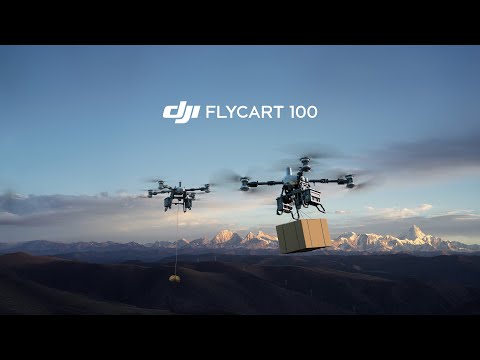
Today, almost all modern flying car designs are really just even more oversized drones, with an added passenger space, and enough power to lift hundreds of kilos of “payload”. The official classification is eVTOLs: electric vertical takeoff and landing aircraft.
Elektrifizierung
The modern drone industry and the future flying cars industry are both built on the “electrification tech stack”.
This interconnected set of technologies started with lithium-ion batteries. Initially developed for small electronics, these batteries were produced in much greater quantities and at ever-decreasing costs thanks to the massive demand from electric vehicles (EVs).
In parallel, the growth of the EV industry helped the development of associated technologies like fast chargers, battery swapping, battery thermal management, etc.
The tooling industry is also quickly electrifying, with most construction and craft tools now available in electric versions using brushless motors and dense batteries.
Already in a scientific research paper from 2021, it was demonstrated that battery density around 215 Wh/kg to 275 Wh/kg would be the range required for economic flying vehicles. Overall, flying cars will be even more demanding on battery tech than EVs, and represent the logical next step once EV batteries are a well-mastered technology.

Quelle: Zelle
Latest Flying Taxis News
Amerikanischer Fortschritt
Im April 2026, an electric aircraft from Joby Aviation took off from JFK Airport for a flight demonstrating the company’s future air taxi route to Manhattan. The design is an egg-shaped cabin, lifted by six tilt-rotor propellers, and powered by electric motors.

Quelle: TTNews
“The aircraft made its way west along the Brooklyn shore before turning north toward the city. Approximately 14 minutes after takeoff, it touched down at the heliport at West 30th Street, completing its historic journey.”
The flying taxi/aircraft can carry five people, including one pilot. So it could technically carry passengers tomorrow. Except that the company is still waiting to receive official FAA certification for passenger services.
And it is a very long process, as the company received its first certification from the FAA in 2022, and is still waiting to be authorized to carry passengers.
Joby is also planning to establish an air taxi network between Texas cities like Dallas, Austin, San Antonio, and Houston. And Florida Governor DeSantis is freeing funding for flying taxi landing and take-off pads.
Regulations slowing down progress could change soon with the eVTOL-Integrationspilotprogramm (eIPP), a White House-backed program aimed at accelerating the safe deployment of electric vertical-takeoff-and-landing aircraft in the US.
“What’s interesting is what will this eIPP allow in terms of operations? So, they have very expressly intended for it to have some type of commercial operation. We don’t yet know. We’re working together with the FAA to see what that might be. So, TBD.”
The eIPP has selected 8 pilot projects to “create one of the largest real-world testing environments for next-generation aircraft in the world“, which will cover aerial taxis as well as logistic networks, emergency medical responses, offshore transportation, etc.
This represents a change in official stance, which until now seemed somewhat wary of authorizing new types of aircraft to operate in the US airways.
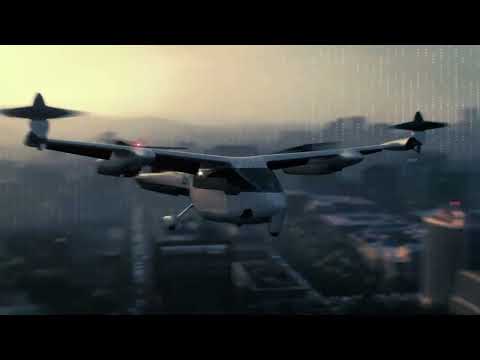
Overall, the eIPP program could let Jobby launch early pilot operations in Arizona, Florida, Idaho, New Jersey, New York, North Carolina, Oklahoma, Oregon, Texas, and Utah.
“America has set the pace and the standard in aerospace innovation since the Wright Brothers first took to the skies. This is how our country has always led — by bringing people together to turn breakthrough technology into real-world progress.
In parallel, the company is planning on launching its first passenger-approved air taxis in Dubai, the Emirates authorities being more open to experimentation than the FAA. However, with the escalating war with Iran setting the region aflame, these plans could be derailed.
“The regulatory hurdles were a little lighter, not unsafe by any stretch of the imagination. But the whole government was leaning in.”
Chinesische Technologie
Over the Pacific, China’s strong lead in drone technology could give it an edge in the flying taxi field as well. For example, it is now possible to order and get delivered by drone drinks in Shenzhen (a Chinese city often described as the local Silicon Valley).
Activities in airspace below 1,000 meters (about 3,280 feet) accounted for business turnover worth 506 billion yuan ($70 billion) in 2023, about 0.4% of China’s economy. By 2035, it’s expected to hit 3.5 trillion yuan (about $490B).
Many companies are working on eVTOL, including automaker XPENG’s (through its flying car unit ARIDGE), logistics company SF Express (through its drone arm Phoenix Wings), and EHang.
China’s Civil Aviation Administration has granted certificates allowing EHang to offer commercial passenger services with its pilotless eVTOL, a low-altitude aircraft that can reach speeds of 130 kph (81 mph) with a maximum range of 30 kilometers (19 miles). The company is planning to start with aerial sightseeing services and has been building takeoff and landing sites in 20 Chinese cities over the past two years.
Übrigen Welt
In the UK, Vertical Aerospace said its Valo aircraft, which can take off vertically, will offer a “more sustainable”, zero-emissions alternative to road taxis. The aircraft is currently undergoing testing, and ultimately could travel at up to 150mph (241 km/h). The plan is to initially use it for premium airport transfers, with the end goal of a similar cost to hiring an Uber.
In Germany, the air taxi makers Lilium and Volocopter filed for bankruptcy, though the latter was later bought by Diamond Aircraft Group, a subsidiary of a Chinese firm. Both firms had been shortlisted for providing transport for tourists in Saudi Arabia.
In Japan, SkyDrive demonstrated flights for the World Expo in 2025 and has partnered with Suzuki for mass production.
In Brazil, Embraer-backed Eve Air Mobility conducted successful flight tests in March 2026 and plans upcoming launches in Brazil and the U.S.
Economics Of Flying Taxis
While many flying taxi companies are looking at competing directly at a price range on par with Uber, this might be a little difficult in practice. At least as long as every flight requires a pilot.
This is in large part because a certified pilot will likely cost more than a freelancing Uber driver.
In addition, flight will always be more energy-consuming than driving. However, the advantage of avoiding traffic entirely and flying in a straight line can help reduce costs.
So, potentially, the total cost of the ride could be lower than expected, with shorter travel time compensating for higher operating costs.
A lot will depend on regulations and the designs authorized to carry passengers: for example, small eVTOLs will suffer from being unable to spread costs over larger passenger groups.
Requirement for dedicated landing facilities will also reduce the flexibility of air taxis, likely confining them to fixed high-demand routes, such as access to airports. Alternatively, more relaxed regulations could let any flat roof of flats, industrial buildings, and malls be turned into a landing pad.
Lastly, charging facilities will need to be considered. Battery swapping might be a better solution to optimize fleet utilization, but it comes with its own extra infrastructure and costs. Alternatively, ultra-fast charging could prove to be an extra compromise to make in the choice of battery, against considerations of performance or safety.
Still, flying taxis could provide significant advantages to economies that embrace this innovation. For example, Americans lost 99 h in 2019 sitting in traffic, which amounts to a $88B loss in productivity.
As the United Nations projects that 68% of the world’s population will live in urban areas by 2050, up from 55% in 2018, this issue of lost productivity from vlogged roads will only grow. For example, the Indonesian capital Jakarta is estimated to lose roughly 2% of its GDP due to traffic jams.
Soon Self-Flying Taxis?
So far, eVTOLs are regulated globally like aircraft, with the implication that they will be operated by a trained pilot. However, the same process that is seeing self-driving cars getting closer to mass deployment could be happening for eVTOL as well.
In some ways, it could even be easier to deploy a self-flying taxi than a self-driving one. After all, flying taxis do not need to have a perfect AI able to detect children crossing a road, deal with traffic jams and aggressive drivers, or wildlife at night.
This might, however, be a very tough pill to swallow for the FAA regulators and the equivalent in other countries.
Simply speaking, aeronautic regulations are focused on maximizing safety and tend to err on the side of caution and conservatism, as a crash of a full-size airplane can be catastrophic. And even if they are smaller, the crash of an eVTOL with its large mass, relatively high altitude of flight, and highly flammable lithium-ion batteries could cause a lot of damage as well.
In this field, China seems to have the advantage, as the EHang EH216-S, using solid-state batteries, has received the world’s first type certificate for pilotless passenger aircraft in late 2023 and has already begun carrying passengers in cities like Hefei and Shenzhen.

Investing In Flying Taxis
Joby Luftfahrt
(JOBY )
As illustrated by the recent progress made in the USA and Dubai, Joby is a global leader in pushing flying taxis into the commercial stage.
Joby has flown over 50,000 miles in dozens of flights over the past nine years. It is one of the few to have demonstrated the ability to transition from vertical takeoff to forward flight, and also one of the few to use pilots in its flight demonstrations. So while it is still not done getting certified for passenger transport, it is getting closer.

Quelle: Joby Luftfahrt
The company also owns the helicopter company Blade, acquired in 2025 for $125M, which flies similar routes and maintains partnerships with Delta Air Lines and Uber, with 50,000+ passengers in 2024.
The company is planning to carry its first passenger in an eVTOL in 2026. It also plans to double production capacity in 2027 from two to four aircraft per month, and acquired a 700,000 square feet manufacturing facility in the Dayton, Ohio area.
Besides operating its own air taxi service, Joby is planning to sell its aircraft to other operators. For example, they signed a letter of intent to sell aircraft and services valued at up to $250 million in Kazakhstan. In Japan, Joby was selected by the Tokyo Metropolitan Government for their eVTOL implementation project, a multi-year plan to make commercial electric air taxi service a reality by 2030.
The company’s expertise in vertical flight is also opening new military applications. Joby’s Hybrid Demonstrator Flies, in a new partnership with L3Harris Technologies, integrates the company’s hybrid turbine powertrain along with its SuperPilot™ autonomy stack.

Quelle: Joby Luftfahrt
The demonstrator, modifying Joby’s passenger design, kürzlich fertiggestellt im September 2025 a 7,000-mile autonomous flight demonstration for the military. The Department of Defense has requested $9.4 billion in its FY26 budget to advance autonomous and hybrid aircraft.
“AFWERX (Air Force Research Laboratory) has partnered with Joby’s team for several years with increasingly complex development and demonstration efforts of autonomy to support contested logistics missions.”
This type of project could help the company get extra funding while it slowly grows and sees the commercial flying taxi market mature. To date, Joby has raised at least $2B (1.2B raised in 2026) from a variety of investors, including the venture capital arms of Intel, Toyota, JetBlue, Uber, Delta Air Lines, and SK Telecom.
“The magic of dual-use technology is that it creates value in both directions. By building on our proven technology stack, our partners can rapidly deliver new capabilities for the Department of War while we benefit from advancing the maturity of our hybrid and autonomous systems. In turn, this will help pave the way for commercial applications, from longer-range hybrid VTOL missions to autonomous air operations in commercial airspace.”
JoeBen Bevirt, CEO and Founder of Joby
Overall, Joby is shaping to become a strong actor in eVTOL, be it for commercial application or military, and is especially leading the charge out of China. The future of the company will be tightly linked to how regulations on eVTOL evolve, in the USA and globally.
Excessive caution or slowing down could be risky, as the company has been burning through its cash. But at the same time, as many countries are already launching pilot projects and initial routes, being early and expanding might be just the right strategy to grab the market as soon as it emerges.
Latest Joby Aviation (JOBY) Aktiennachrichten und Entwicklungen